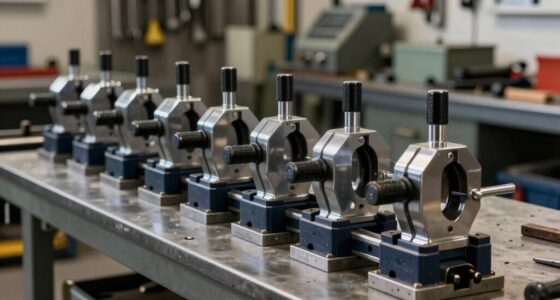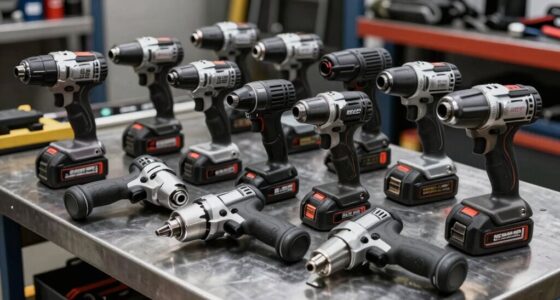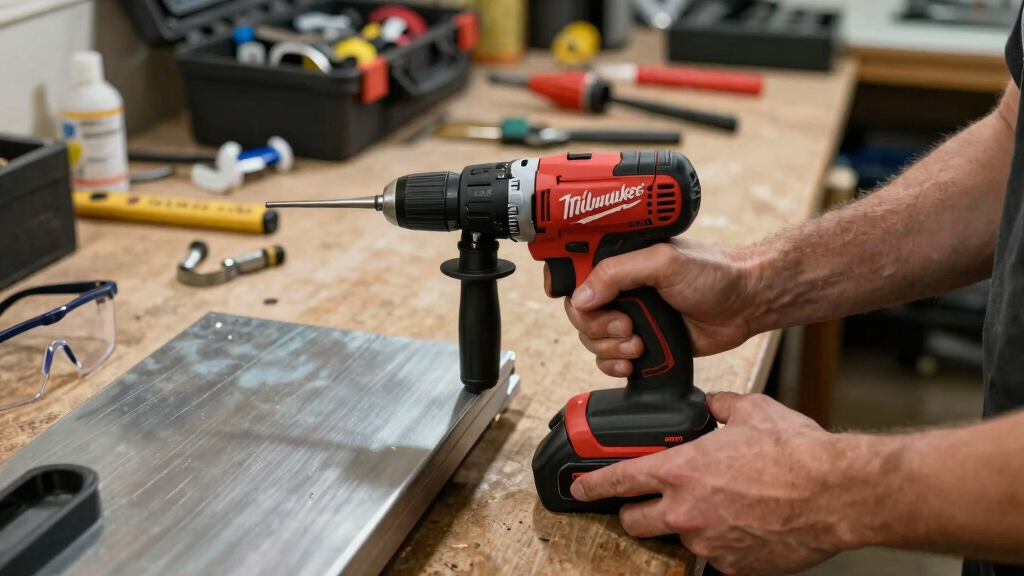
The best Milwaukee power tool for most buyers is the M18 Compact Brushless 2-Tool Combo Kit because it pairs two daily-use drivers in a manageable package rather than spending the whole budget on one specialty tool. The M18 Fuel 1/2″ Hammer Drill-Driver Kit is my premium pick for buyers who place drilling power above breadth, while the 2953-20 Impact Driver offers sharper value to anyone who already owns M18 batteries. The main choice is between a complete kit and a bare tool, followed by whether compact handling, sustained high-load output, or specialty cutting matters most. A grinder, oscillating multi-tool, or Hackzall can be the right answer for focused work, but none matches a drill-and-impact pairing as a first purchase. Keep reading for the full breakdown, ranking logic, and buyer type each model fits.

Get business pricing on garage and car supplies
- Business-only prices and quantity discounts
- Tax-exempt purchasing
- Multiple users, one account, clear invoices
Complete the kit


Key Takeaways
- I rank the M18 Compact Brushless 2-Tool Combo Kit as the best overall choice because its drill-and-impact pairing covers more routine jobs than any single tool in the roundup.
- The M18 Fuel 1/2″ Hammer Drill-Driver Kit earns the premium position, while the tool-only M18 Fuel Hammer Drill/Driver makes more financial sense for buyers who already have batteries and a charger.
- The 2953-20 Impact Driver delivers the strongest tool-only value, but its low purchase price becomes less persuasive when a battery and charger must be bought separately.
- The M18 Hammer Drill/Impact Driver XC Combo Kit is the beginner-friendly alternative when complete kit contents and longer runtime matter more than the compact feel of the top pick.
- Among the specialty tools, the grinder suits metalwork, the oscillating tool favors controlled renovation cuts, and the Hackzall handles compact demolition; their different blade motions make them poor substitutes for one another.
| Milwaukee M18 Fuel Brushless Lithium-Ion 4-1/2 in. / 5 in. Cordless Small Angle Grinder |  | Best for Metalwork | Model: 2880-20 | Power system: M18 cordless | Battery compatibility: All M18 batteries | VIEW LATEST PRICE | See Our Full Breakdown |
| Milwaukee M18 Compact Brushless 2-Tool Combo Kit, Drill Driver/Impact Driver |  | Best Starter Kit | Tools included: Drill driver and impact driver | Tool count: 2 | Battery count: 2 | VIEW LATEST PRICE | See Our Full Breakdown |
| Milwaukee M18 Fuel 1/2 Inch Hammer Drill/Driver |  | Best for Precision Fastening | Chuck size: 1/2 in. | Battery capacity: 5.0Ah | Operating mode: Hammer drill | VIEW LATEST PRICE | See Our Full Breakdown |
| Milwaukee M18 18-Volt Lithium-Ion Cordless Hammer Drill/Impact Driver XC Combo Kit |  | Best Heavy-Duty Combo | Tool count: 2 | Voltage: 18V | Battery package: 2 x 48-11-1828 M18 XC REDLITHIUM | VIEW LATEST PRICE | See Our Full Breakdown |
| Milwaukee Electric M18 Fuel 1/2-Inch Hammer Drill-Driver Kit |  | Best Dedicated Hammer Drill Kit | Product type: Hammer drill-driver kit | Power system: M18 Fuel cordless | Chuck size: 1/2 in. | VIEW LATEST PRICE | See Our Full Breakdown |
| Milwaukee 2953-20 18V Cordless 1/4-Inch Hex Impact Driver |  | Best Dedicated Impact Driver | Voltage: 18V | Maximum Torque: 2,000 inch-pounds | Maximum Speed: 3,900 RPM | VIEW LATEST PRICE | See Our Full Breakdown |
| Milwaukee M18 FUEL Brushless Lithium-Ion Cordless Oscillating Multi-Tool |  | Best for Precision Remodeling | Tool Type: Oscillating multi-tool | Platform: Milwaukee M18 | Power Source: Lithium-ion battery | VIEW LATEST PRICE | See Our Full Breakdown |
| Milwaukee M18 FUEL Hackzall |  | Best One-Handed Cutting Tool | Application: Reciprocating saw | Motor: Brushless | Stroke Length: 7/8 inch | VIEW LATEST PRICE | See Our Full Breakdown |
More Details on Our Top Picks
Milwaukee M18 Fuel Brushless Lithium-Ion 4-1/2 in. / 5 in. Cordless Small Angle Grinder
I rank the Milwaukee M18 Fuel Small Angle Grinder as the lineup’s metalworking specialist because its electronic clutch, overload protection, and anti-vibration handle address control as well as cutting power. Compared with the Milwaukee M18 FUEL Hackzall, this grinder is better for smoothing welds, removing rust, and making controlled cuts in metal; the Hackzall is more useful for rough demolition across mixed materials. The grinder’s 4-1/2-inch and 5-inch disc support adds flexibility without moving into a bulky large-grinder format. Its main limitation is value for new Milwaukee buyers: this is a bare-tool purchase, so a battery and charger add to the real cost. It also has a narrower job range than the oscillating multi-tool or either two-tool kit.
Pros:- Electronic clutch reduces the severity of grinder kickback
- Overload protection helps protect the motor during demanding cuts
- Anti-vibration side handle improves control during longer grinding sessions
- Accepts both 4-1/2-inch and 5-inch grinding accessories
Cons:- Battery and charger are sold separately
- Less versatile for general remodeling than the oscillating multi-tool
- Disc capacity is unsuitable for deep cuts that require a larger grinder
Best for: M18 owners who regularly cut, grind, or clean metal and already have compatible batteries
Not ideal for: First-time Milwaukee buyers or remodelers seeking one tool for wood, drywall, and detailed cutting
- Model:2880-20
- Power system:M18 cordless
- Battery compatibility:All M18 batteries
- Disc capacity:4-1/2 in. and 5 in.
- Spindle size:5/8-11
- Motor type:Brushless
- Protection features:Electronic clutch and overload protection
- Side handle:Anti-vibration
Our verdict“I recommend this grinder to established M18 users who prioritize controlled metal cutting and surface preparation over broad jobsite versatility.”
Milwaukee M18 Compact Brushless 2-Tool Combo Kit, Drill Driver/Impact Driver
The Milwaukee M18 Compact Brushless 2-Tool Combo Kit is my starter pick because it covers routine drilling and high-speed screwdriving with two batteries in one package. Its compact bodies are better suited to cabinets, overhead fastening, and crowded framing bays than the larger Milwaukee M18 18-Volt Hammer Drill/Impact Driver XC Combo Kit. Brushless motors also turn battery energy into useful working time with less maintenance than brushed designs. The compromise is capability: the included drill driver lacks the stated masonry focus of the M18 Fuel hammer-drill models, while the unspecified battery capacity makes runtime harder to judge before purchase. Buyers already committed to another battery platform gain less from the package. I place it below the more task-specific Fuel tools for raw performance, but its balanced two-tool setup gives newcomers a practical M18 foundation.
Pros:- Includes separate drill-driver and impact-driver tools
- Compact design fits overhead and confined work areas
- Brushless motors support longer runtime and lower maintenance
- Two included batteries reduce interruptions between charges
Cons:- No stated hammer-drill mode for masonry work
- Battery capacity is not identified
- Provides limited value to buyers invested in a different battery system
Best for: DIY renovators and apprentices who need compact drilling and fastening tools plus batteries in their first M18 purchase
Not ideal for: Tradespeople who frequently drill brick or concrete and need a dedicated hammer-drill mode
- Tools included:Drill driver and impact driver
- Tool count:2
- Battery count:2
- Battery system:M18
- Motor type:Brushless
- Design:Compact
Our verdict“I recommend this kit as a compact M18 starting point for buyers whose work centers on wood, hardware, and general fastening.”
Milwaukee M18 Fuel 1/2 Inch Hammer Drill/Driver
I give the Milwaukee M18 Fuel 1/2 Inch Hammer Drill/Driver the precision-fastening role because its mechanical clutch provides repeatable control when fastener depth matters, while hammer mode keeps masonry work within reach. Compared with the Milwaukee 2953-20 1/4-Inch Hex Impact Driver, this model accepts round-shank drill bits and offers finer torque control; the impact driver remains the faster, less fatiguing choice for driving long structural screws. An all-metal chuck with carbide teeth helps hold bits during demanding drilling, and the specified 5.0Ah battery capacity supports sustained work. Those strengths bring extra bulk compared with the compact drill in the brushless two-tool kit. It is also less convenient for rapid bit changes than a hex impact driver. I favor it for buyers who need one controlled drilling platform across wood, fasteners, brick, and block.
Pros:- Mechanical clutch supports consistent fastening depth
- Carbide-toothed all-metal chuck provides secure bit retention
- Hammer mode handles brick, block, and concrete drilling
- 5.0Ah battery capacity supports longer work sessions
Cons:- Bulkier for overhead work than the compact combo-kit drill
- Slower bit changes than a 1/4-inch hex impact driver
- A single drill cannot match the workflow flexibility of a two-tool kit
Best for: Installers and maintenance professionals who alternate between controlled fastening, conventional drilling, and occasional masonry holes
Not ideal for: Users mainly driving large structural screws, who will get quicker bit changes and easier handling from the 2953-20 impact driver
- Chuck size:1/2 in.
- Battery capacity:5.0Ah
- Operating mode:Hammer drill
- Chuck construction:All-metal with carbide teeth
- Clutch type:Mechanical
- Masonry applications:Brick, block, and concrete
- Carry feature:Belt clip
Our verdict“I recommend this model for buyers who value fastening control and chuck versatility more than the speed and compactness of an impact driver.”
Milwaukee M18 18-Volt Lithium-Ion Cordless Hammer Drill/Impact Driver XC Combo Kit
The Milwaukee M18 Hammer Drill/Impact Driver XC Combo Kit earns my heavy-duty combo position by pairing masonry-capable drilling with a separate impact driver and two high-capacity XC batteries. Compared with the Milwaukee M18 Compact Brushless 2-Tool Combo Kit, this package gives buyers a stated 500 in.-lb torque rating, an all-metal keyless chuck, and hammer-drill capability for broader material coverage. The dedicated impact driver also lets two people work at once or keeps drilling and fastening bits mounted separately. That capability comes with tradeoffs: XC batteries add size and weight, making the compact brushless kit easier overhead. The stated 500 in.-lb output also leaves performance-focused masonry users better served by an M18 Fuel hammer drill. With no extra accessories identified, buyers may still need bits and sockets. I rank it as the more versatile paired kit, not the lightest one.
Pros:- Combines a hammer drill-driver and impact driver for broader job coverage
- Two M18 XC high-capacity batteries support a two-tool workflow
- All-metal gear case and keyless chuck suit demanding work
- Two-speed drill reaches up to 1,800 RPM
Cons:- XC batteries make the tools heavier than compact-kit alternatives
- 500 in.-lb torque may fall short for frequent heavy masonry drilling
- No additional drilling or driving accessories are identified
Best for: Remodelers and property-maintenance crews who need separate drilling and fastening tools with occasional masonry capability
Not ideal for: Cabinet installers and overhead tradespeople who place low weight and short tool bodies ahead of hammer-drill capability
- Tool count:2
- Voltage:18V
- Battery package:2 x 48-11-1828 M18 XC REDLITHIUM
- Hammer drill-driver model:2607-20
- Impact driver model:2656-20
- Chuck type:All-metal keyless
- Maximum torque:500 in.-lb
- Speed ranges:0–400 and 0–1,800 RPM
Our verdict“I recommend this kit to buyers who want broader material capability than the compact combo kit and can accept extra weight.”
Milwaukee Electric M18 Fuel 1/2-Inch Hammer Drill-Driver Kit
I place the Milwaukee Electric M18 Fuel 1/2-Inch Hammer Drill-Driver Kit highest for buyers who want a focused masonry-drilling package instead of paying for a second tool. Compared with the Milwaukee M18 18-Volt Hammer Drill/Impact Driver XC Combo Kit, this pick centers on a Fuel hammer drill with a 5.0Ah battery rather than splitting the purchase across drilling and impact driving. The carbide-toothed all-metal chuck resists bit slippage, while the mechanical clutch supports controlled fastening after the masonry hole is finished. A belt clip also makes short moves around a jobsite easier. The package is less flexible than either combo kit because there is no separate impact driver for long screws or simultaneous work. Its listed kit contents are also incomplete beyond the battery information, so buyers should verify what accompanies the drill. I favor it for repeated brick, block, and concrete work.
Pros:- Fuel hammer-drill design targets fast masonry drilling
- All-metal chuck with carbide teeth improves bit grip
- Mechanical clutch supports repeatable fastening control
- 5.0Ah battery capacity balances runtime with portability
Cons:- No separate impact driver is included
- Less versatile than a two-tool combo for mixed drilling and fastening
- The supplied data does not identify every included kit component
Best for: Electricians, plumbers, and installers who regularly drill masonry and want a 5.0Ah M18 Fuel hammer-drill package
Not ideal for: Framing crews and general remodelers who need a separate impact driver for frequent long-screw fastening
- Product type:Hammer drill-driver kit
- Power system:M18 Fuel cordless
- Chuck size:1/2 in.
- Battery capacity:5.0Ah
- Operating mode:Hammer drill
- Chuck construction:All-metal with carbide teeth
- Clutch type:Mechanical
- Masonry applications:Brick, block, and concrete
- Carry feature:Belt clip
Our verdict“I recommend this kit for regular masonry drilling, provided a separate impact driver is not central to the buyer’s workflow.”
Milwaukee 2953-20 18V Cordless 1/4-Inch Hex Impact Driver
I rank the Milwaukee 2953-20 Impact Driver as the best dedicated impact option because its 2,000 inch-pounds of torque and 3,900 RPM output suit long screws, structural fasteners, and repetitive installation work. Compared with the Milwaukee M18 Compact Brushless 2-Tool Combo Kit, this model gives experienced users a more focused, high-output driver without making them pay for a drill they may already own. Its four drive modes provide more control when moving between heavy fasteners and smaller hardware, while the 4.47-inch body fits crowded framing and cabinetry spaces. The tradeoff is specialization: it cannot replace a drill for clean round holes, and its power may be excessive for delicate assembly. It is also sold without a battery, making the value strongest for buyers already invested in Milwaukee’s M18 platform.
Pros:- 2,000 inch-pounds of torque handles demanding fastening work
- Four drive modes improve control across different fastener sizes
- Short 4.47-inch body reaches confined work areas
- Tri-LED lighting reduces shadows around the fastener
Cons:- Battery and charger must be purchased separately
- Cannot replace a drill for standard hole-making tasks
- High output can damage small fasteners or soft materials if the wrong mode is selected
Best for: Contractors and experienced DIYers who already own M18 batteries and regularly drive structural screws or other demanding fasteners
Not ideal for: First-time tool buyers who need a battery and charger, or woodworkers seeking one tool for both drilling and controlled fastening
- Voltage:18V
- Maximum Torque:2,000 inch-pounds
- Maximum Speed:3,900 RPM
- Length:4.47 inches
- Weight:2.2 lbs
- Drive Modes:4
- Chuck:1/4-inch hex
- Work Light:Tri-LED
Our verdict“This is my impact-driver pick for M18 owners who value maximum fastening power in a compact body more than kit completeness.”
Milwaukee M18 FUEL Brushless Lithium-Ion Cordless Oscillating Multi-Tool
The Milwaukee M18 FUEL Oscillating Multi-Tool earns my precision-remodeling role because it tackles plunge cuts, trim work, sanding, and grout removal in places where the Milwaukee M18 FUEL Hackzall would be too aggressive. Its 4.2-degree oscillation angle favors fast material removal, while variable speed and auto-load control help match that output to more delicate surfaces. Vibration dampening also matters during prolonged detail work because it reduces the fatigue associated with rapid oscillation. A 180-degree LED spreads light across the work area rather than creating one narrow bright spot. This versatility comes with two compromises: it costs more than many corded multi-tools, and it lacks the Hackzall’s speed on rough demolition cuts. Since this is a bare-tool purchase, I see the strongest value for established M18 users rather than buyers building a kit from scratch.
Pros:- Variable speed supports both controlled detail work and faster material removal
- Auto-load operation adjusts output as the blade meets resistance
- Vibration dampening reduces fatigue during extended cutting or sanding
- Wide LED coverage improves visibility around plunge cuts
Cons:- Battery and charger are not included
- Higher purchase cost than many corded multi-tools
- Less efficient than the M18 FUEL Hackzall for long or heavy demolition cuts
Best for: Remodelers, cabinet installers, and flooring professionals who need controlled plunge cuts and detail work in confined or poorly lit areas
Not ideal for: Budget buyers who do most work near an outlet, or demolition crews that need the longer cutting stroke of a reciprocating saw
- Tool Type:Oscillating multi-tool
- Platform:Milwaukee M18
- Power Source:Lithium-ion battery
- Oscillation Angle:4.2 degrees
- Speed Control:Variable-speed dial
- Auto-Load Feature:Yes
- Vibration Dampening:Yes
- Work Light:180-degree LED
Our verdict“This pick makes the most sense for M18-equipped remodelers who need precision and multi-material versatility more than raw demolition speed.”
Milwaukee M18 FUEL Hackzall
I place the Milwaukee M18 FUEL Hackzall ahead of larger saws for one-handed cutting because its compact format gives plumbers, electricians, and maintenance crews better control in tight spaces. Compared with the Milwaukee M18 FUEL Oscillating Multi-Tool, its 7/8-inch stroke removes material faster when cutting pipe, conduit, branches, or framing, though it sacrifices the multi-tool’s fine plunge-cut accuracy. The brushless motor and REDLINK Plus electronics support demanding workloads, while the pivoting shoe keeps the blade steadier against irregular surfaces. Its main limitation is also its defining trait: the short, one-handed design is easier to maneuver but less suitable than a full-size reciprocating saw for sustained heavy demolition. The bare-tool format also raises the entry cost for newcomers, especially once a REDLITHIUM battery and charger are added.
Pros:- One-handed design provides strong control in confined work areas
- Brushless motor delivers faster cutting with reduced motor wear
- Pivoting shoe stabilizes the blade against varied surfaces
- REDLINK Plus electronics manage power delivery during demanding cuts
Cons:- Battery and charger are sold separately
- Shorter 7/8-inch stroke is less productive than a full-size reciprocating saw in heavy demolition
- Replacement M18 batteries add substantial cost for buyers outside the platform
Best for: Plumbers, electricians, facilities technicians, and M18 owners who frequently cut pipe, conduit, branches, or framing in confined spaces
Not ideal for: Demolition specialists who need a two-handed full-size reciprocating saw for long cuts through thick structural material
- Application:Reciprocating saw
- Motor:Brushless
- Stroke Length:7/8 inch
- Design:One-handed
- Battery Platform:M18 REDLITHIUM
- Electronic Control:REDLINK Plus Intelligence
- Shoe:Pivoting
- Included Battery:No
Our verdict“This is my choice for tradespeople who need reciprocating-saw speed in spaces where a full-size two-handed saw becomes awkward.”
How We Picked
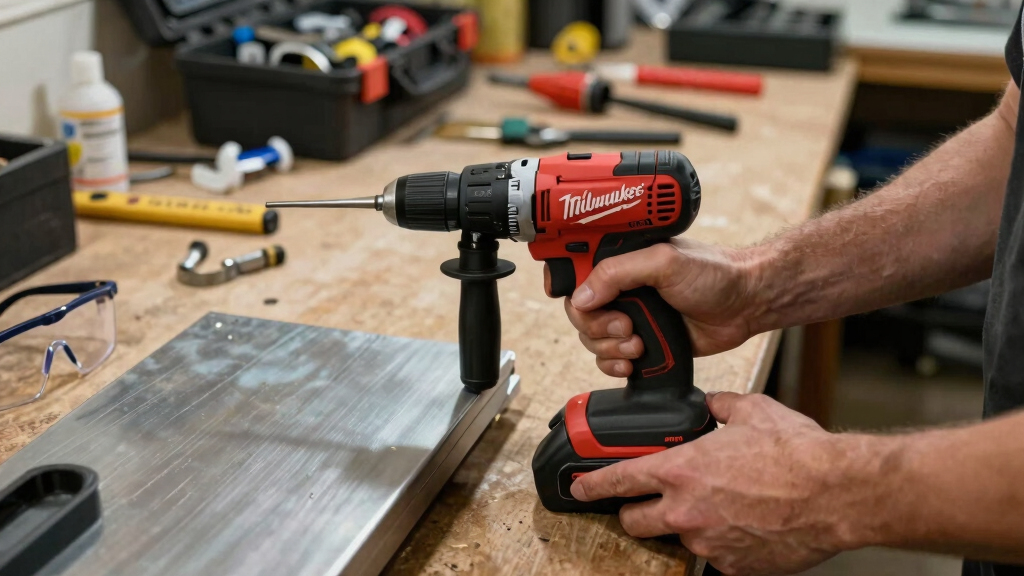
I evaluated these tools by comparing job coverage, usable performance, and ease of ownership rather than treating maximum power as the only measure of quality. Daily usefulness carried the most weight because the best Milwaukee power tools should earn regular space in a buyer’s kit. I also examined motor class, tool size, battery demands, kit contents, and accessory requirements. Complete kits received credit for reducing startup cost, while bare tools were judged from the viewpoint of an existing M18 owner. Build quality and serviceability mattered, but I ranked each model by the work it enables rather than brand reputation alone.
The ranking favors versatile drill-and-impact combinations before high-performance single tools and task-specific cutters. That logic puts the compact two-tool kit ahead of the XC combo because it balances broad coverage with easier handling, while the XC package remains appealing for buyers who value runtime. The premium hammer drill kit ranks above its bare-tool counterpart for buyers starting without supporting equipment, though established M18 users may reverse that order. I placed the 2953-20 high among individual tools because fastening is common and its compact format has value in tight spaces. The grinder, oscillating multi-tool, and Hackzall occupy narrower roles, so their placement reflects specialization rather than weak capability.
Factors to Consider When Choosing Best Milwaukee Power Tools
I would choose among these tools by identifying the jobs that occur every week, then checking whether batteries and accessories change the real purchase price. Milwaukee’s M18 catalog ranges from everyday drivers to focused cutting tools, so the highest-output model is not automatically the smartest buy. Platform ownership, working space, and load duration can alter the ranking for an individual buyer. The following factors explain when paying more produces a useful gain and when a simpler package is enough.
Choose Core Job Coverage Before Specialty Power
I recommend listing the jobs a tool must perform before comparing motor labels or peak figures. A drill-and-impact kit covers drilling, screwdriving, and heavy fastening, which makes it a stronger foundation than a grinder or saw for most households. A grinder becomes the better purchase when metal preparation, masonry cutting, or abrasive work fills the schedule. The oscillating multi-tool earns its place through controlled plunge cuts and access near finished surfaces, while the Hackzall favors faster cuts where finesse matters less. Buying a specialty tool first can leave a basic fastening gap that soon requires another purchase. I would only move a focused cutter ahead of a combo kit when its intended job is already clear and frequent.
Price the Battery System, Not Just the Tool
A bare-tool price can appear attractive until the cost of a compatible battery and charger is added. For a new M18 buyer, I compare the complete ready-to-work cost, including whether the supplied batteries suit the tool’s power draw. Existing owners can extract more value from the 2953-20, grinder, multi-tool, or Hackzall because their current packs remove that startup expense. High-draw cutting and grinding tools also benefit from larger packs, but those packs add weight and can make a compact tool feel less agile. A kit with an extra battery reduces pauses by allowing one pack to charge while the other works. I would avoid paying for another charger unless the bundle discount or included battery capacity makes the full package cheaper than buying separately.
Match the Motor Tier to the Workload
Milwaukee’s standard brushless tools suit routine drilling and fastening without the price attached to the FUEL tier. I see FUEL models as a workload upgrade for repeated large holes, stubborn fasteners, long cuts, or jobs where speed affects daily output. Occasional users may never recover that price difference through time saved. The standard compact combo can also feel better during overhead work because modest dimensions often matter more than unused power. Buyers working in masonry, structural lumber, or demanding renovation should give greater weight to sustained output and load control. I would pay for the higher tier when heavy work is routine, not merely because it sits above another model in Milwaukee’s range.
Balance Compact Handling Against Runtime
Tool dimensions and battery size affect control long after the initial purchase decision. A compact body reaches between framing, cabinets, and mechanical equipment more easily, while a smaller battery reduces wrist strain during overhead fastening. Larger XC packs support longer sessions and demanding tools, but they shift the center of gravity and increase the weight carried all day. This is why the compact combo and XC combo serve different buyers even though both include a drill and impact driver. I would choose lighter packs for intermittent precision work and keep higher-capacity packs for grinding, demolition cutting, or repeated high-load drilling. Buyers who need both behaviors may gain more from owning two battery sizes than from forcing one pack to handle every task.
Budget for Accessories and Ongoing Care
The tool is only part of the working system, particularly with grinders, saws, and oscillating tools. Grinding wheels, cutting discs, blades, drill bits, and driver bits vary widely in durability, and poor accessories can make a capable motor feel slow. I would reserve part of the budget for job-matched, good-quality consumables rather than spending every dollar on the bare tool. Buyers should also account for guards, dust collection, hearing protection, eye protection, and storage where the task calls for them. Brushless motors reduce routine motor maintenance, but vents, battery contacts, chucks, and blade mounts still need inspection. A lower-priced tool that burns through unsuitable blades or discs can cost more over time than a better-planned purchase.
Frequently Asked Questions
Should my first Milwaukee M18 purchase be a combo kit or a tool-only model?
I would start with a combo kit if no M18 batteries or charger are already available. It supplies the platform hardware and usually covers drilling plus fastening at a lower combined cost than separate purchases. A tool-only model becomes more attractive after the battery expense has already been absorbed. Between the two-tool options here, the Compact Brushless kit favors handling, while the XC combo favors longer working sessions. I would buy a bare tool first only when one specialized job clearly matters more than general coverage.
Is Milwaukee M18 FUEL worth paying more for than standard brushless tools?
I think M18 FUEL is worth the premium for frequent high-load work, including larger drilling, aggressive cutting, and sustained fastening. Its added capability has less practical value during occasional furniture assembly, light repairs, or small pilot-hole work. Standard brushless models can be lighter and leave more budget for batteries, bits, or a second tool. The buyer who earns money with the tool is more likely to benefit from faster work and stronger load performance. For intermittent home use, I would favor the standard compact kit unless a demanding project already justifies FUEL.
Can I use the same M18 batteries across all eight tools?
These products belong to Milwaukee’s M18 battery platform, so M18 packs share the same basic tool interface. Compatibility does not mean every pack produces the same working experience. A compact battery keeps the impact driver or drill easier to maneuver, while a larger XC pack is better matched to prolonged grinding and cutting. I would pair high-draw tools with packs that offer greater capacity and output, then use smaller packs where balance matters more. Buyers should also compare bundle contents because some listings are bare tools and include no battery at all.
Should I choose the grinder, oscillating multi-tool, or Hackzall for cutting work?
I would choose the angle grinder for metal, masonry, and abrasive material removal, provided the correct wheel and guard are fitted. The oscillating multi-tool is better for controlled plunge cuts, trim work, scraping, and jobs close to finished surfaces. The Hackzall uses a reciprocating action that suits quick demolition and cuts in confined spaces, but it offers less finesse than the oscillating tool. None of the three fully replaces the others because blade direction, access, finish quality, and material range differ. The right choice follows the material and desired cut quality, not the motor label alone.
Which Milwaukee hammer drill option makes the most sense?
I would choose the M18 Fuel 1/2″ Hammer Drill-Driver Kit for a premium, ready-to-work drilling package. The tool-only M18 Fuel 1/2 Inch Hammer Drill/Driver is the more economical route for an established M18 owner who already has suitable packs. Buyers who also need fastening capability should examine the XC hammer drill and impact driver combo instead of buying a second driver later. That combo trades some compactness for broader coverage and useful battery capacity. For lighter everyday drilling, the compact brushless two-tool kit remains the more balanced starting point.
Conclusion
For the best overall choice, I recommend the M18 Compact Brushless 2-Tool Combo Kit because it covers the broadest range of everyday drilling and fastening without excessive bulk. My best-value pick is the 2953-20 Impact Driver for buyers who already own M18 batteries; newcomers should factor in the missing battery and charger. For premium drilling, I would choose the M18 Fuel 1/2″ Hammer Drill-Driver Kit, while existing platform owners can save by buying the tool-only M18 Fuel Hammer Drill/Driver. Beginners who favor a complete, runtime-focused package should choose the M18 Hammer Drill/Impact Driver XC Combo Kit. For specific jobs, I would select the angle grinder for metalwork, the oscillating multi-tool for controlled renovation cuts, and the Hackzall for compact demolition. The final choice comes down to whether the next purchase must build a versatile foundation or solve one recurring task better than a general-purpose tool can.
Halloween Picks
halloween
As an affiliate, we earn on qualifying purchases.