
TL;DR

Get business pricing on garage and car supplies
- Business-only prices and quantity discounts
- Tax-exempt purchasing
- Multiple users, one account, clear invoices
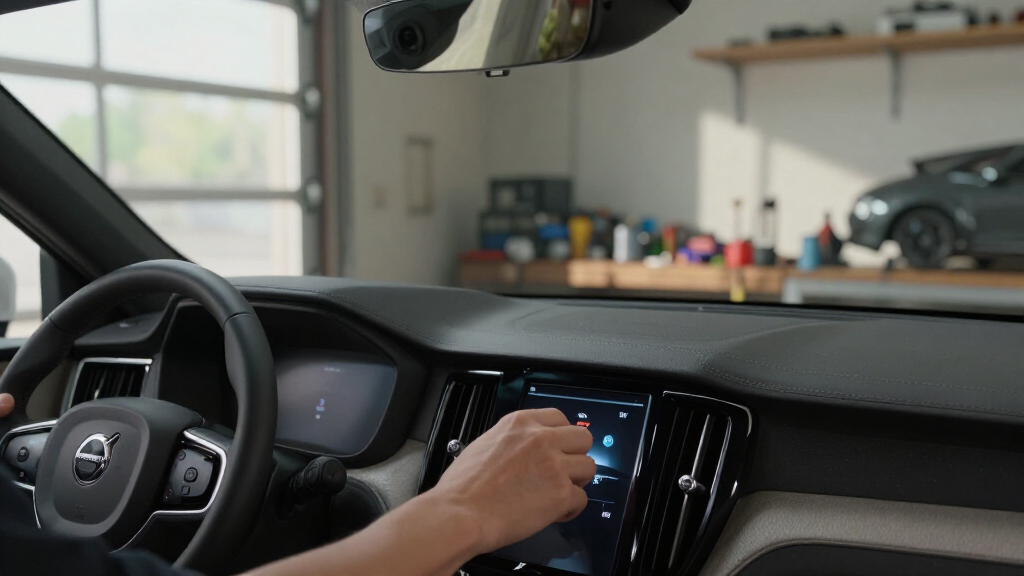
Volvo has released a software update for the EX60 EV that allows the vehicle to detect deer around corners. This new feature uses enhanced sensors and AI algorithms to improve safety, especially in rural areas. The update is confirmed to be available now, but full operational details are still emerging.
Volvo has introduced a new software update for its EX60 electric SUV that allows the vehicle to detect deer approaching from around corners. This feature, confirmed by Volvo, uses advanced sensors and AI to identify wildlife in blind spots, significantly enhancing safety for drivers and animals alike. The update is now available to current EX60 owners through Volvo’s official channels.
The new feature, termed ‘Corner Deer Detection’, leverages the vehicle’s existing sensor suite combined with enhanced AI algorithms to predict the presence of deer approaching from hidden angles. Volvo states that the update improves the vehicle’s ability to interpret signals from sensors that are typically blocked by obstacles, such as trees or roadside structures, allowing the car to alert drivers proactively.
According to Volvo, this update is part of their broader commitment to integrating AI-driven safety features in their electric vehicles. The company confirmed that the software is compatible with the current EX60 models and can be installed via a over-the-air update, minimizing the need for dealership visits. Volvo emphasized that the feature is designed specifically for rural and semi-rural driving conditions, where wildlife encounters are more common.
While Volvo has shared technical details about the sensors and AI systems involved, the exact accuracy rates and performance metrics in different environments are still being tested and are not yet publicly available. The company has indicated that initial field tests show promising results, with the system successfully detecting deer in various scenarios, including around bends and in low-visibility conditions.
Enhanced Wildlife Detection Improves Road Safety
This development marks a notable step forward in automotive safety technology by enabling vehicles to ‘see’ around corners, a challenge traditionally limited to human vision. The ability to detect deer before they come into direct view can reduce collisions, which are often fatal for both animals and drivers. As electric vehicles like the EX60 become more prevalent, integrating such advanced safety features is critical for reducing wildlife-related accidents and promoting safer rural driving.
Furthermore, this feature demonstrates how AI and sensor technology are transforming vehicle safety systems from reactive to proactive measures. It also sets a precedent for other automakers to develop similar wildlife detection capabilities, potentially leading to industry-wide safety standards for rural and semi-rural driving environments.
As an affiliate, we earn on qualifying purchases.
Volvo’s Safety Innovations and Wildlife Detection Tech
Volvo has long positioned itself as a leader in vehicle safety, pioneering features such as collision avoidance, pedestrian detection, and automatic emergency braking. The company’s recent focus has been on integrating AI and sensor technology into its electric vehicle lineup, aiming to enhance safety in diverse driving conditions.
This latest update builds on previous safety features, such as cross-traffic alert and blind-spot detection, by extending the vehicle’s perception capabilities to include wildlife detection around corners. Similar systems are being tested by other automakers, but Volvo’s implementation is notable for its focus on rural safety and its use of AI algorithms to interpret sensor data more effectively.
The EX60, launched in 2024, is part of Volvo’s push into electric SUVs, with the company emphasizing safety as a core value. The software update reflects Volvo’s ongoing efforts to leverage AI to mitigate risks associated with wildlife crossings, which are a common cause of accidents in many regions.
“Our new software update exemplifies Volvo’s commitment to safety innovation, enabling our vehicles to detect wildlife around corners and prevent accidents before they happen.”
— Håkan Samuelsson, Volvo CEO
Performance and Accuracy of Deer Detection System Still Unverified
While Volvo reports promising initial results, detailed performance metrics, including detection accuracy rates and false alarm rates, remain undisclosed. It is unclear how well the system performs in extreme weather or low-light conditions, or how it compares to human observation in real-world scenarios. Independent testing and broader field data are still pending, and Volvo has not yet shared comprehensive validation results.
Broader Deployment and Future Safety Features Development
Volvo plans to roll out the Corner Deer Detection feature to all EX60 owners via an over-the-air update within the next few months. The company also indicated that further enhancements to wildlife detection and other proactive safety measures are in development, aiming to expand AI-driven perception capabilities across its electric vehicle lineup.
Automakers and safety regulators will likely monitor the system’s real-world performance closely, and additional testing may be required before broader adoption or regulatory approval. Volvo has suggested that similar AI-based detection features could be integrated into other models in the future, broadening the impact of this technology.
Key Questions
How does the deer detection system work?
The system uses sensors combined with AI algorithms to interpret signals from obscured areas, predicting the presence of deer approaching from around corners and alerting the driver proactively.
Is the feature available now?
Yes, Volvo has announced that the Corner Deer Detection update is now available to current EX60 owners via an over-the-air software update.
Will this feature prevent all wildlife collisions?
While designed to improve detection, no system can guarantee prevention of all wildlife encounters. Drivers should remain vigilant, especially in rural areas.
Are other vehicles adopting similar technology?
Some automakers are developing wildlife detection features, but Volvo’s implementation is among the first to focus specifically on around-corner detection using AI-enhanced sensors.
What are the limitations of this system?
The system’s performance in extreme weather, low-light conditions, or with moving wildlife at high speeds remains unverified. Further testing is needed to confirm its reliability across diverse environments.
Source: rss
Fall Picks
fall essentials
As an affiliate, we earn on qualifying purchases.