
When you’re choosing between AWD and 4WD, it helps to know their core differences. AWD automatically drives all four wheels for better traction on slick roads, perfect for daily driving and light snow. On the other hand, 4WD excels off-road, tackling mud and steep inclines with a low-range setting for extra torque. Your decision should be based on your driving habits and terrain needs. Stick around, and you’ll discover more insights to make the best choice.

Get business pricing on garage and car supplies
- Business-only prices and quantity discounts
- Tax-exempt purchasing
- Multiple users, one account, clear invoices
Key Takeaways
- AWD automatically distributes power to all wheels for enhanced traction on paved roads and in light weather conditions.
- 4WD is designed for rugged terrain, providing off-road capabilities and often includes a low-range setting for increased torque.
- AWD excels in rain and light snow, while 4WD is ideal for mud, rocks, and steep inclines.
- AWD systems offer superior handling in changing conditions, whereas 4WD may feel stiffer on city roads.
- Understanding the distinct features of AWD and 4WD helps in making informed decisions based on driving habits and terrain suitability.
When it comes to choosing the right drive system for your vehicle, understanding the difference between all-wheel drive (AWD) and four-wheel drive (4WD) can save you a lot of headache. While both systems enhance traction control, their drivetrain differences serve specific vehicle applications and terrain suitability. Knowing how each system works helps you make an informed decision based on your needs.
AWD typically distributes power to all four wheels automatically. It’s designed for on-road use, providing superior handling characteristics in various weather conditions. If you often traverse through rain or light snow, AWD’s ability to transfer power seamlessly to the wheels with the most grip enhances your driving experience. It’s perfect for everyday vehicles, such as sedans or crossovers, where consistent traction is vital.
AWD automatically distributes power to all wheels, enhancing traction and handling for everyday vehicles in various weather conditions.
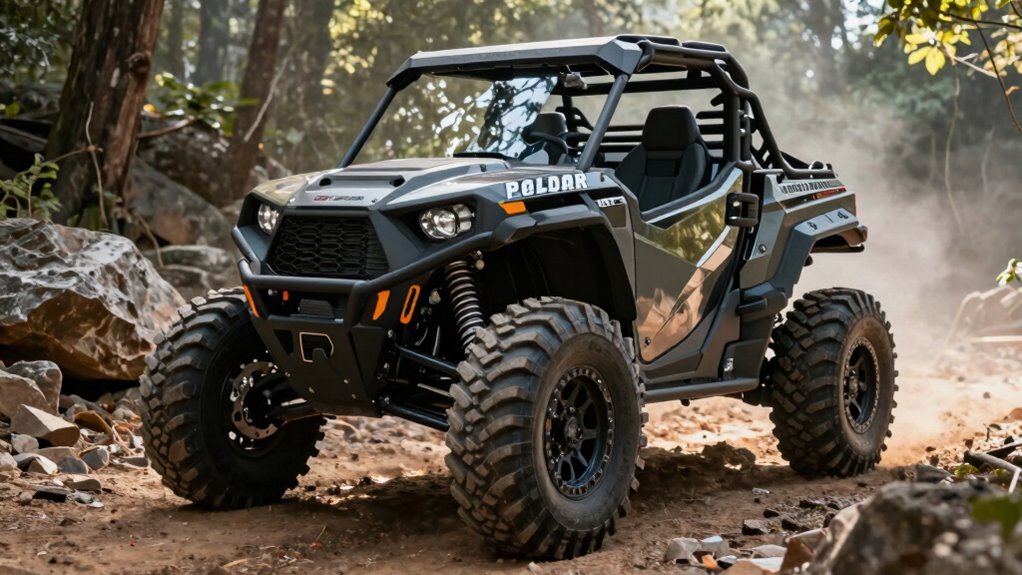
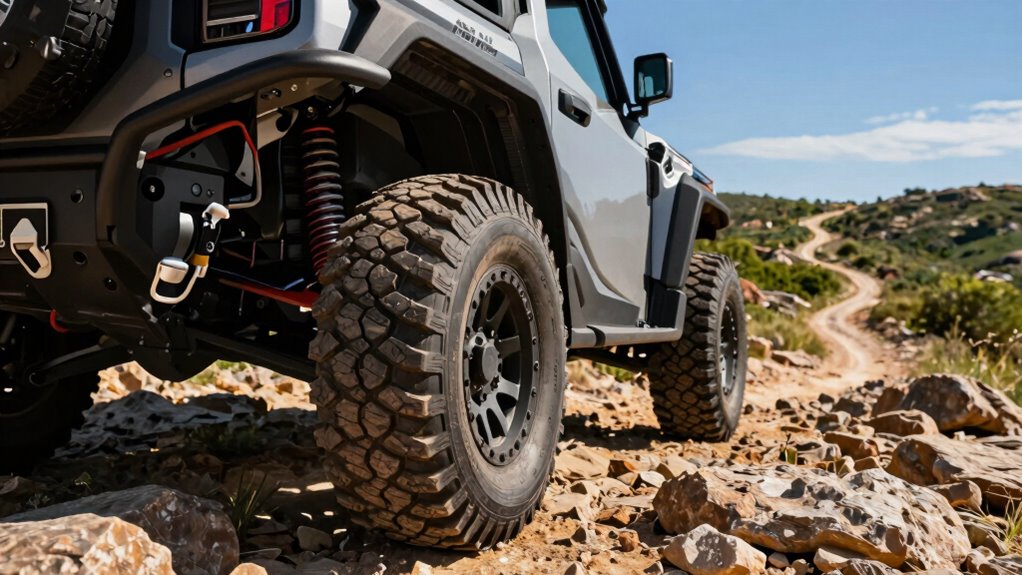
On the other hand, 4WD is built for off-road performance and rugged terrain. This system often includes a low-range setting that allows for greater torque and enhanced grip when you’re tackling challenging landscapes like mud, rocks, or steep inclines. If you’re an adventure seeker, 4WD is your go-to option. It gives you more control over your vehicle’s traction, allowing you to switch between two-wheel drive and four-wheel drive as needed. This flexibility is significant when traversing unpredictable terrains.
Understanding the handling characteristics of each system can also guide your choice. AWD vehicles tend to offer a smoother ride, as their systems are calibrated for seamless power distribution. In contrast, 4WD vehicles may feel more robust and capable when you’re off-road, but they can come with a stiffer ride on paved roads. This distinction is important if you frequently switch between city driving and outdoor escapades. Additionally, knowing the drivetrain differences can help you maintain your vehicle’s performance and longevity. For example, regular maintenance can extend the lifespan of your drivetrain components, ensuring reliable operation in various conditions. Moreover, understanding these systems can help prevent potential mechanical issues associated with improper use or neglect. Recognizing the specific terrain suitability of each system can help you choose the best setup for your lifestyle and driving habits. Proper knowledge of vehicle capabilities can also aid in optimizing your vehicle’s performance and safety during different driving scenarios.
As an affiliate, we earn on qualifying purchases.
Frequently Asked Questions
Can I Switch Between AWD and 4WD While Driving?
You shouldn’t switch between AWD and 4WD while driving. Doing so can compromise driving safety and system reliability. Each system is designed for specific conditions, and changing them on the fly might stress the drivetrain. It’s best to make these adjustments when you’re stopped and on stable ground. Always consult your vehicle’s manual for guidelines to guarantee you’re using the right system for the terrain you’re traversing.
Which System Is Better for Off-Road Adventures?
For off-road adventures, 4WD is typically better. It offers superior traction control and terrain adaptability, allowing you to tackle rough landscapes with ease. When you engage 4WD, you’re maximizing grip on slippery or uneven surfaces, which is essential in challenging conditions. While AWD has its perks on less demanding terrains, if you’re aiming for serious off-roading, 4WD gives you the edge. So, gear up and hit those trails confidently!
Do AWD and 4WD Affect Fuel Efficiency?
Yes, AWD and 4WD can affect fuel efficiency. Generally, AWD systems tend to offer better fuel consumption than 4WD, especially in everyday driving, because they use less power to engage all wheels. However, 4WD systems, designed for rugged terrain, often decrease drivetrain efficiency due to added weight and complexity. If you prioritize fuel economy, consider how much off-road capability you really need versus your daily driving habits.
How Does Weather Impact AWD and 4WD Performance?
Weather conditions greatly impact AWD and 4WD performance. In rain or snow, both systems enhance traction control, helping you maintain grip on slippery surfaces. AWD automatically adjusts power to the wheels, making it ideal for varying conditions, while 4WD offers more control in extreme weather, like deep snow or mud. However, you need to engage 4WD manually, so you should choose based on the specific weather challenges you face.
Are There Maintenance Differences Between AWD and 4WD Systems?
“You get what you pay for.” When it comes to maintenance, AWD systems typically require less upkeep than 4WD. AWD often has lower maintenance costs due to fewer moving parts, while 4WD can demand more attention, especially if used off-road. System durability varies, too; AWD is designed for on-road performance, while 4WD is built for rugged terrain. So, knowing the differences can help you budget for maintenance effectively!
Conclusion
To conclude, understanding the difference between AWD and 4WD can really enhance your driving experience. Did you know that roughly 30% of drivers mistakenly believe AWD and 4WD are the same? Knowing when to use each system can make a big impact, especially in challenging conditions. So next time you hit the road, remember the unique advantages of both systems. With this knowledge, you’ll navigate any terrain with confidence and ease!
Halloween Picks
halloween
As an affiliate, we earn on qualifying purchases.