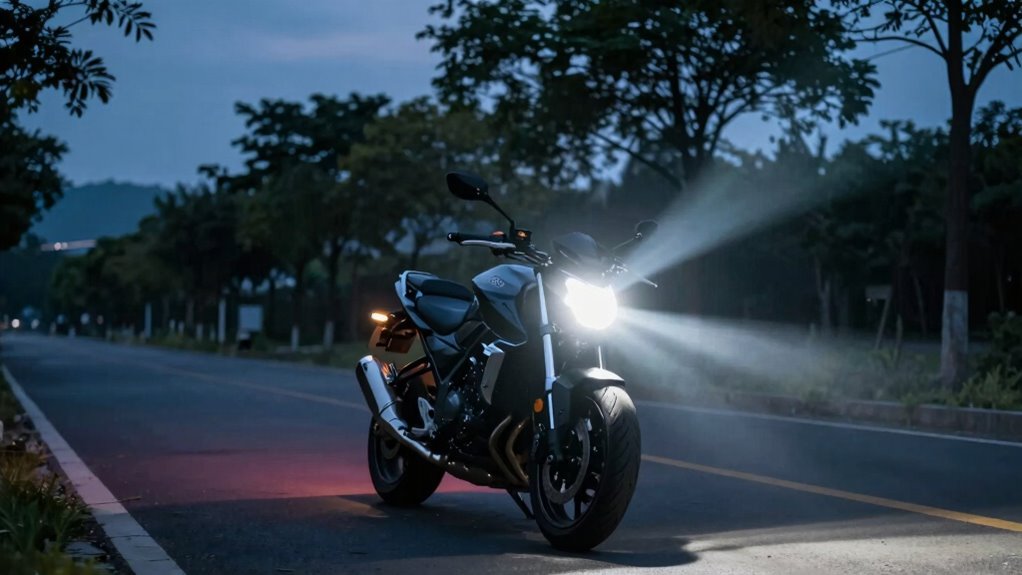
You shouldn’t aim your auxiliary lights straight ahead, as many riders do, because it causes glare that blinds other drivers and reduces your visibility. Properly adjusting your lights to project slightly downward and outward allows you to illuminate curves, roadside hazards, and blind spots without blinding others. Ensuring correct aim enhances safety, visibility, and overall riding comfort. If you want to learn how to get your lights perfectly aligned, keep exploring these essential tips.

Get business pricing on garage and car supplies
- Business-only prices and quantity discounts
- Tax-exempt purchasing
- Multiple users, one account, clear invoices
Key Takeaways
- Most riders aim auxiliary lights straight ahead, causing glare and reducing visibility for themselves and other drivers.
- Properly aimed lights should be directed downward and outward to illuminate hazards and road edges.
- Aiming lights high or forward increases glare, blinding oncoming traffic and decreasing overall safety.
- Incorrect alignment diminishes peripheral vision and hampers the rider’s ability to detect hazards.
- Routine adjustments are essential to maintain correct beam angles and maximize safety benefits.

Auxiliary lights can markedly enhance your visibility and safety on the road, but their effectiveness depends heavily on proper aiming. When installing these lights, many riders instinctively aim them straight ahead, thinking that’s the best way to maximize their beam adjustment and improve visibility enhancement. However, this common mistake can do more harm than good. Properly aimed auxiliary lights should complement your main headlights without blinding other drivers or creating dangerous glare. Misaligned lights might seem to brighten your path, but in reality, they can obscure your vision and reduce safety for everyone on the road.
Your goal with auxiliary lighting is to extend your line of sight without causing discomfort or danger to others. To do this, you need to focus on beam adjustment, ensuring the lights are angled slightly downward and outward. This setup helps illuminate the sides of the road, roadside hazards, and curves, providing a broader view while preventing the light from shining directly into the eyes of oncoming traffic. When aiming your auxiliary lights, avoid pointing them directly forward or too high, as this can cause glare and diminish your ability to see clearly at night. Instead, aim for a level or slightly downward angle that enhances your peripheral vision and depth perception.
Visibility enhancement doesn’t come from simply adding more light, but from strategic aiming. Proper beam adjustment ensures the extra illumination is focused where it’s most needed, like dark corners or poorly lit stretches, rather than just brightening the air ahead. It’s tempting to aim auxiliary lights high for maximum brightness, but that approach can backfire. Instead, focus on adjusting them so that they aid your main headlights and fill in blind spots, especially on winding roads or rural areas. This way, you’re not only boosting your visibility but also reducing the risk of blinding other drivers who might otherwise be affected by improperly aimed auxiliary lights.
Achieving proper aiming also involves understanding the correct alignment techniques to ensure the lights are optimized for your specific riding environment. Regular checks and adjustments are essential because vibrations and changing riding conditions can alter your lights’ alignment over time. Incorporating routine maintenance and adjustments will help keep your auxiliary lights properly aimed. In this way, careful aiming and maintenance help maximize their benefits while minimizing risks. Remember, the goal is to improve your ability to see the road and potential hazards, not to dazzle or distract other drivers. Taking the time to properly align your auxiliary lights ensures you maximize their benefits while minimizing risks. Properly aiming your lights, along with routine checks, can make a significant difference in your safety and visibility. Carefully aiming your auxiliary lights, and making adjustments as needed, will help you enjoy safer, more *efficient* illumination tailored to your riding environment. Proper aiming isn’t just a detail—it’s a *vital* step in maximizing the safety and functionality of your auxiliary lighting system.
auxiliary motorcycle light alignment kit
As an affiliate, we earn on qualifying purchases.
As an affiliate, we earn on qualifying purchases.
Frequently Asked Questions
Are Auxiliary Lights Legal in All Regions?
Auxiliary lights aren’t legal everywhere, so you should check your local road regulations first. Many regions have specific rules about motorcycle accessories, including auxiliary lights, to prevent glare and guarantee safety. You might need to use certain colors or limit the brightness. Ignoring these rules could lead to fines or safety issues. Always research your area’s regulations before installing auxiliary lights to stay compliant and ride safely.
How Do Different Light Colors Affect Visibility?
Bright blues boost visibility with bold contrast, while red hues reduce glare, helping you see and be seen. Green lights provide clear color contrast, enhancing perception of obstacles. Yellow and amber enhance beam intensity, especially in fog or rain. Different light colors affect visibility by optimizing contrast and reducing glare, so choose colors wisely. Remember, beam intensity and color contrast work together to improve safety, making your ride safer and more visible in various conditions.
Can Auxiliary Lights Drain My Motorcycle’s Battery?
Yes, auxiliary lights can drain your motorcycle’s battery if they have high power consumption or if you leave them on for extended periods. To prevent battery drain, choose lights with low power consumption and turn them off when not needed. Regularly check your battery’s health, especially if you use auxiliary lights often, and consider installing a separate power source or switch to manage their energy use effectively.
What Is the Best Type of Auxiliary Light for Night Riding?
Think of your auxiliary lights as your guiding star in off-road adventures and mountain biking at night. The best type for night riding is LED auxiliary lights—they’re bright, energy-efficient, and durable. They cut through darkness, illuminating the trail ahead without blinding others. Just like setting a course in wild terrain, choose a beam pattern that enhances your vision without pointing directly where most riders aim, ensuring safety and clarity on every adventure.
How Often Should I Check and Adjust My Auxiliary Lights?
You should check and adjust your auxiliary lights regularly, ideally before each ride or at least once a month. Make sure your mounting techniques keep the lights steady and correctly aimed, avoiding glare for other riders. Also, check the light wattage to confirm it’s appropriate—not too bright or dim—so you maintain ideal visibility without blinding others. Regular adjustments help maximize safety and visibility during night rides.
Conclusion
You might think aiming your auxiliary lights high is safer, but it actually blinds other drivers and reduces your visibility. Imagine causing a collision just because of poorly aimed lights—that’s a risk you don’t want to take. Properly aligned lights not only keep you safer but also show respect for fellow road users. Don’t let a simple mistake lead to tragedy; aim your lights correctly and ride responsibly for everyone’s peace of mind.
Evergreen bestsellers Picks
bestsellers
As an affiliate, we earn on qualifying purchases.