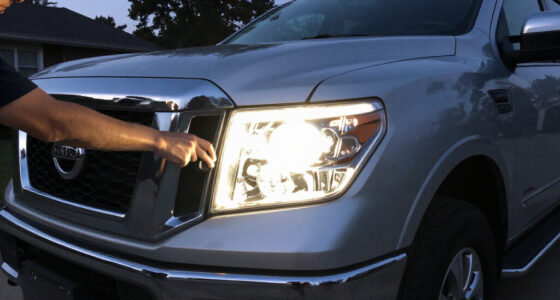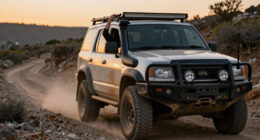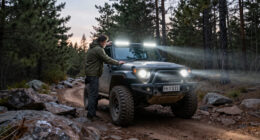
Choosing an off-road LED light bar is less about picking the one with the biggest advertised lumen number and more about balancing useful light against fit, glare, power draw, and cost. The central choice is usually between a single-row bar, with one line of LEDs in a narrow housing, and a dual-row bar, with two lines in a taller, bulkier housing. Either type can work well, but they suit different vehicles and trips.

Get garage and car supplies delivered free — and shop member deals
- Fast, free delivery on millions of items
- Access to Prime Big Deal Days deals on October 6–7
- Prime Video, Amazon Music and more included

Nilight 20-Inch 420W LED Light Bar with Two 4-Inch LED Pods and Wiring Harness
- ✔ Included lights: One 20-inch light bar and two 4-inch LED pods
- ✔ Beam: Spot and flood combo
- ✔ Design: Triple row

Nilight 4-Inch LED Light Bar Pods, 60W, Flood and Spot Combo, 2-Pack
- ✔ Quantity: Two light bars/pods
- ✔ Size: 4 inches
- ✔ Listed power: 60W

NAOEVO 12-Inch LED Light Bar with Four 4-Inch LED Pods
- ✔ Included lights: One 12-inch bar and four 4-inch LED pods
- ✔ LED chips: 180 SMD3030 chips
- ✔ Beam information: Spot and flood beams; listed beam angle 120 degrees
A single-row bar is generally the better match for a tight mounting location, a low-profile build, or a driver who wants auxiliary light without taking up much space. A dual-row bar makes more sense when the vehicle has room for it and broad, intense illumination matters more than a discreet installation. Actual performance varies by optics, LED quality, beam pattern, cooling, and manufacturing; row count alone does not prove that one bar is brighter or better. The comparisons below focus on the tradeoffs buyers can judge before choosing a specific model.
At a Glance
| Criteria | Single-row LED light bars | Dual-row LED light bars | Winner |
|---|---|---|---|
| Profile and mounting fit | Narrower housing; easier to fit in confined locations | Taller housing; needs more clearance and a suitable mounting surface | A |
| Potential light output | Can deliver strong output, but has less space for emitters and optics | More room for emitters and optics, with higher output potential | B |
| Beam control and glare | Often easier to position discreetly; optics matter more than row count | Can create a broader or more intense beam, but poor aiming may cause glare | Depends |
| Electrical demand | Often lower for comparable product ranges; verify rated amperage | Often higher; may require more careful circuit and alternator planning | A |
| Heat management and durability | Smaller housing can limit cooling; construction quality varies | More housing space can aid heat dissipation, but build quality remains decisive | Depends |
| Installation | Usually easier to mount where height or clearance is limited | May need sturdier brackets, more clearance, and additional wiring planning | A |
| Value | Often a good fit when compact size and moderate output meet the need | Worth a premium when the extra output is useful and the vehicle can support it | Depends |
Nilight 20-Inch 420W LED Light Bar with Two 4-Inch LED Pods and Wiring Harness
For a buyer who wants more than a pair of small auxiliary lamps, this Nilight kit gives us the most balanced package in the lineup. Its 20-inch triple-row light bar is paired with two 4-inch pods, combining a larger front-mounted source with separate lamps that can add coverage where the vehicle’s mounting layout allows. The spot-and-flood combination is intended to serve both distance and nearby area lighting, making the set more adaptable than the standalone two-pod Nilight option.The practical advantage is that the kit includes a 12-foot, three-lead wiring harness. That makes it easier to plan a complete installation than with NAOEVO, which does not include a harness. The Nilight housing is rated IP67 for water and dust resistance, and the listing specifies compatibility with 12V vehicles. Buyers should still confirm the harness layout, available circuit capacity, and mounting points for their particular truck, ATV, car, or motorcycle.There are limits to how confidently we can evaluate the electrical side: the stated 420W is not divided between the bar and pods, so we cannot infer each component’s draw or assume the figure represents real-world brightness. It also requires a 12V power source and a larger mounting area than the compact two-pack. Choose it when package completeness and a larger bar matter more than a minimal footprint; skip it if you need precise per-light electrical data or only have room for small pods.
Pros:
- Combines a 20-inch triple-row bar with two 4-inch pods.
- Includes a 12-foot, three-lead wiring harness.
- Uses a spot-and-flood combo beam design.
- IP67-rated housing is specified for water and dust resistance.
Cons:
- The 420W figure is not separated by light, making electrical planning less specific.
- The larger bar requires more mounting room than the compact two-pod option.
- Installation still requires checking 12V compatibility and vehicle wiring capacity.
Best for: Off-road drivers who want a larger central light bar, auxiliary pods, and a wiring harness in one 12V-oriented kit.
Not ideal for: Buyers with limited mounting space, non-12V electrical systems, or a need for separately specified wattage for each light.
Bottom line: We rank this first for buyers seeking the most complete bar-and-pod package, provided they can accommodate its size and verify the electrical load.
“We rank this first for buyers seeking the most complete bar-and-pod package, provided they can accommodate its size and verify the electrical load.”
Nilight 4-Inch LED Light Bar Pods, 60W, Flood and Spot Combo, 2-Pack
When a full-width bar would be awkward or unnecessary, these two 4-inch pods are the simpler fit. Each combines spot and flood beam patterns, so the pair is designed to offer both a more focused reach and broader nearby illumination without adding a 20-inch housing across the front of the vehicle. Compared with the larger Nilight kit, this set trades overall scale for a more compact mounting approach.Its strongest practical point is the included wiring harness kit, along with mounting brackets. That gives it an installation advantage over NAOEVO, whose five-light set requires a separately sourced harness. The aluminum housing is designed to dissipate heat, and the IP67 rating indicates stated resistance to water and dust. The listing identifies 20 high-intensity 3W LEDs and a 60W rating, but buyers should not assume that those figures alone predict usable distance or lighting quality on a trail.Compact does not mean effortless: installation requires drilling and wiring, and the product’s two-lamp layout cannot provide the same broad central coverage as a larger bar plus pods. It is a better match for a modest auxiliary-light addition or a vehicle with restricted mounting space than for someone seeking the most comprehensive front lighting package. We place it second because its harness and focused format are practical, while the 20-inch Nilight kit offers a more extensive set of lights.
Pros:
- Two 4-inch pods suit tighter mounting spaces.
- Spot-and-flood combo beam design balances focused and broad lighting intent.
- Wiring harness kit and mounting brackets are included.
- IP67-rated aluminum housing is designed for heat dissipation and outdoor resistance.
Cons:
- Requires drilling and wiring for installation.
- Does not provide the wider bar coverage of the 20-inch Nilight kit.
- The listing does not establish real-world beam distance or performance from its power figures.
Best for: Drivers who need a compact pair of auxiliary lights, want a harness included, and have suitable mounting points.
Not ideal for: Buyers seeking a wide main light bar, a multi-location five-light setup, or an installation that avoids drilling and wiring.
Bottom line: We recommend this compact two-pack when included wiring and smaller pods matter more than the broader coverage of a full-size light bar.
“We recommend this compact two-pack when included wiring and smaller pods matter more than the broader coverage of a full-size light bar.”
NAOEVO 12-Inch LED Light Bar with Four 4-Inch LED Pods
NAOEVO takes a different approach from either Nilight kit: instead of one 20-inch bar and two pods, it supplies a 12-inch light bar plus four 4-inch pods. That five-light arrangement gives buyers more separate fixtures to position around a vehicle, which may suit a setup where multiple mounting points are already available. Its listed spot-and-flood combination aims to serve both distance and wide-area lighting, while the adjustable mount allows the beam direction to be repositioned.The IP68-rated construction is the highest stated ingress-protection claim among these three listings, compared with IP67 for both Nilight options. The aluminum housing and cooling fans are also presented as features for demanding conditions. Those claims may appeal to off-road buyers, but the extra fixtures do not automatically make the kit easier to install: a wiring harness is not included, so it takes more parts planning than either Nilight package. Buyers should confirm how the five lights are intended to connect and whether the supplied mounting approach suits their vehicle.We rank this third because its specification information is less consistent than the alternatives. The color temperature appears as both 5400K and 6500K, while wattage is listed as 540W in one field and a maximum compatible light-source wattage of 200W elsewhere. Those discrepancies make it difficult to plan electrical demand from the listing alone. Compared with the two-pod Nilight, NAOEVO provides more fixtures and a higher stated protection rating, but buyers who prioritize clear installation planning should favor one of the Nilight kits.
Pros:
- Includes one 12-inch bar and four 4-inch pods for a five-light layout.
- Spot-and-flood beams are intended to combine distance and area coverage.
- IP68-rated construction is specified, compared with IP67 on the Nilight kits.
- Adjustable mount allows beam direction to be repositioned.
Cons:
- Wiring harness is not included.
- Listed color temperature conflicts between 5400K and 6500K.
- Wattage information is inconsistent, complicating electrical planning.
Best for: Off-road owners who want a multi-point five-light arrangement, adjustable aiming, and are prepared to source a compatible harness.
Not ideal for: Buyers who need consistent electrical and color-temperature specifications, or who want wiring included for a more straightforward installation plan.
Bottom line: We would choose NAOEVO for its five-light layout and higher stated ingress rating only after confirming its wiring needs and conflicting specifications.
“We would choose NAOEVO for its five-light layout and higher stated ingress rating only after confirming its wiring needs and conflicting specifications.”
As an Amazon Associate we earn from qualifying purchases.
Key Differences
The most visible difference is physical: single-row bars are slimmer, while dual-row bars occupy more vertical space. That can decide the purchase before light output enters the discussion. A tight roof rack, bumper opening, or grille location may accommodate a single-row unit but leave a dual-row bar exposed to branches, block airflow, or interfere with other equipment. Measure the mounting area and check the manufacturer’s dimensions, including bracket clearance, rather than relying on a product photo.
Dual-row construction creates more room for LEDs and reflectors, so it can support higher output. That is a capability, not a guarantee: beam pattern, lens design, LED efficiency, and honest performance specifications matter. Extra brightness also brings costs beyond the purchase price, including higher electrical demand and a greater chance of glare if the light is aimed poorly. For many recreational drivers, a well-designed single-row bar with the right beam pattern is more useful than a larger bar whose extra intensity is unnecessary.
The best choice is consequently a fit-and-use decision, not a universal ranking. Pick the dual-row option when its added output addresses a real need on dark trails or open terrain and the vehicle has the space and electrical capacity. Pick single-row when clearance, clean installation, restrained power use, or a less prominent profile matters more. In either case, check local rules before using auxiliary lights on public roads; off-road lighting may need to be covered or switched off on-road.
Detailed Comparison
Profile and mounting fit (Single-row LED light bars wins — moderate)
Single-row wins, with a moderate advantage. Its narrower housing is easier to tuck into a bumper, grille, rack, or other constrained position. A dual-row bar needs more height and may sit more exposed, which can raise the risk of impact from branches or reduce clearance. If the mounting area is spacious, the difference matters less; if it is tight, it can settle the decision. Measure the bar and its brackets, not just the advertised length.
Potential light output (Dual-row LED light bars wins — moderate)
Dual-row has the advantage in potential, but not an automatic win in real performance; significance is moderate. A second row provides room for more emitters and optics, which can support greater total output. Yet a carefully engineered single-row light may outperform a poorly made dual-row model, and raw lumen claims do not show how far or evenly the beam reaches. Compare tested output, beam distance, and usable beam pattern when reliable data is available.
Beam control and glare (minor difference)
This depends on the specific optics and intended beam pattern. A dual-row bar can produce a more intense beam, useful when it is aimed at a suitable off-road zone, but that intensity can become distracting glare for other drivers or reflect off dust, snow, and vegetation. A single-row bar can be easier to place discreetly, but it is not inherently glare-free. The gap is minor as a design-category comparison; lens, beam pattern, mounting height, aim, and responsible use matter more than row count.
Electrical demand (Single-row LED light bars wins — moderate)
Single-row generally wins, with a moderate practical advantage. Many dual-row models draw more current because they use more LEDs, though the exact difference depends on the models being compared. Check the rated amperage and required fuse rather than estimating from appearance. Higher draw can mean thicker wiring, more load on the vehicle’s electrical system, and less room for other accessories. A dual-row bar remains workable if the circuit and charging system are planned for it.
Heat management and durability (minor difference)
No category wins consistently; the difference is minor without model-specific evidence. A larger dual-row housing may provide more room to dissipate heat, while its size can also make it more exposed to impacts. A compact single-row design may be easier to protect, but a small housing still needs sound thermal engineering. Look for credible ingress protection, sealed connectors, sturdy mounts, effective heat sinking, and a meaningful warranty. Housing shape alone is a weak durability test.
Installation (Single-row LED light bars wins — moderate)
Single-row usually wins, with a minor-to-moderate advantage. Its lower profile can simplify mounting and clearance checks, and lower current may ease wiring requirements. Dual-row installation can call for more robust brackets, careful positioning, and a circuit sized for its draw. Neither type should be installed by guesswork: use the specified fuse and wire gauge, secure the harness away from heat and moving parts, and follow the vehicle and light-maker instructions.
Value (moderate difference)
Value depends on whether the added output solves a real problem. A single-row bar is often the better buy for drivers who need a compact auxiliary light and do not need the maximum output a particular dual-row model offers. Paying more for dual-row can be worthwhile on very dark routes or open terrain where its measured beam performance will be used. If the buyer’s main goal is just a larger-looking light, the extra cost, mounting space, and power draw are hard to justify.
Single-row LED light bars: Pros and Cons
Pros:
- Slim housing fits more constrained mounting locations.
- Often draws less current than a comparable higher-output dual-row model.
- Lower profile can be easier to protect and integrate into a vehicle.
Cons:
- Less room for emitters and optics can limit output potential.
- A compact housing still needs effective heat management.
- May not deliver enough light for drivers who need a wide, intense beam over a large area.
Dual-row LED light bars: Pros and Cons
Pros:
- More room for LEDs and optics creates higher output potential.
- Can suit dark, open routes where broad and intense illumination is useful.
- A larger housing may allow more space for heat-dissipation design.
Cons:
- Taller housing may not fit cleanly and can be more exposed to impacts.
- Often requires more current and closer attention to wiring and circuit capacity.
- Extra output may add glare and cost without helping drivers who do not need it.
Who Should Choose What
Choose Single-row LED light bars if:
- Your bumper, grille, rack, or other mounting location has limited height or clearance.
- You want a lower-profile installation for trail driving and do not need maximum output.
- You prefer to limit accessory power draw or keep the wiring plan simpler.
Choose Dual-row LED light bars if:
- You regularly drive dark trails or open terrain and can make practical use of higher measured output.
- Your vehicle has a sturdy, protected mounting location with enough clearance.
- You have checked current draw and can support the bar with correctly sized wiring, fuse, and circuit.
Skip both if: Skip both if you cannot mount and wire an auxiliary light safely, need a compliant road-use lighting solution but have not checked local regulations, or have not identified a specific lighting gap a bar would solve.
Value for Money
Paying more for a dual-row bar is worthwhile only when the additional light output is both verified and useful for your routes. A buyer who drives remote, unlit terrain may benefit from a stronger beam enough to justify the extra purchase and installation costs. A driver who mainly wants a compact trail accessory, has limited mounting space, or uses the light occasionally will usually get better value from a well-built single-row bar matched to the right beam pattern.
Do not pay a premium based only on row count or a headline lumen figure. Compare actual power draw, beam measurements, construction, warranty, and the accessories included. A cheaper bar can be poor value if it has unreliable sealing or weak mounts; an expensive bar is poor value if its output cannot be used safely or legally. The sensible value choice is the least costly model that meets the lighting need without exceeding the vehicle’s fit and electrical limits.
Final Verdict
For most buyers who want a practical off-road light bar and have not identified a need for very high output, choose a single-row model. It is easier to fit, generally less demanding electrically, and more likely to suit a clean, low-profile installation. Choose a dual-row bar when you regularly travel genuinely dark routes, its measured beam performance offers a clear benefit, and your vehicle can handle its size and current draw.
The biggest deciding factor is not the number of rows: it is whether the extra output of a particular dual-row bar solves a real visibility problem. If it does, pay for it. If not, the single-row bar is the more sensible value. Whichever you choose, check fit and electrical specifications, aim it carefully, and follow local rules for auxiliary lighting.
Frequently Asked Questions
Is a dual-row LED light bar always brighter than a single-row bar?
No. A second row allows space for more LEDs and optics, so dual-row bars have higher output potential. Actual brightness and useful beam distance depend on the LEDs, lens, reflector design, power, and build quality. Compare credible performance data for the exact models rather than assuming row count proves brightness.
Which type is better for a vehicle with limited mounting space?
A single-row bar is usually the easier fit because its housing is narrower. Still, measure the complete unit, including brackets and wiring clearance, and check that the chosen position will not obstruct airflow, sensors, or other equipment.
Does a dual-row bar use more power?
Often, but not in every model comparison. More LEDs can mean higher current draw, so check the manufacturer’s amperage rating and wiring instructions. Size the fuse and wire for the specific bar and confirm the vehicle’s circuit can support it.
Is a more powerful light bar better for road use?
Not necessarily. High output can create glare and may not be legal to use on public roads. Check local requirements for auxiliary lights, including when they must be covered or switched off, and aim the bar to avoid shining into other drivers’ sightlines.
Halloween Picks
halloween
As an affiliate, we earn on qualifying purchases.